Vladimir Leschiov was born in 1970, in Daugavpils, Latvia. He finished Art School in Riga in 1989. Since 1992, he has worked as an illustrator, designer, and director for video production companies in Latvia. Vladimir studied animation at the Konstfack University College of Arts, Crafts and Design in Sweden. Since 2005, he has been teaching animation at the Latvian Academy of Arts, and in 2007 he established the animation studio Lunohod in Riga, Latvia. Click here to view the director's website. "Wings and Oars"(2009. Un antiguo piloto repasa su vida –La Tierra, el Cielo, las Mujeres- todo aquello que sucedió en el trayecto desde una pista aérea hasta una casa flotante abandonada Entrevista a Vladimir en "Film and Scissors" Artículo en Animation Blog acerca del corto "Insomnia". http://www.lunohod.lv/
Theodore Ushev is a Bulgarian born animator, graphic designer, illustrator and multimedia artist, who lives in Montreal, Quebec, Canada.
He was born in Bulgaria and graduated stage decoration, animation, and make-up at Plovdiv's School of Scenic Arts.He obtained a Master degree in Graphic Design from the National Academy of Arts in Sofia.[1] He first made a name as a poster and graphic designer, before moving to Montreal in 1999. There he quickly gained a reputation as an animation filmmaker with for the National Film Board of Canada, with films such as Vertical, The Man Who Waited, Tower Bawher, Tzartitza, and Drux Flux, winner of the Canadian Film Institute Award for Best Canadian Animation at the Ottawa International Animation Festival.[2] He created live show multimedia and promo animations for the British band Public Symphony and David Gilmour’s “In an Island” album and live tour, and the illustrations for Chris Robinson' book "Ballad of a Thin Man: In Search of Ryan Larkin" (2008). VIA WIKIPEDIA
Theodore Ushev has been featured here on several occasions. He has the intellect to confront powerful subjects, applying a range of film and animation skills in his work. Drux Flux handles the issue of man's place in a post-industrial age. The movie commences with the mechanical clatter of a printing press where a battered, sepia edition of the opening title and credit is run off. Thereafter we are on a train journey in which the the ruins of a heavy industrial landscape are explored in a swift moving collage of photographs that move from desolation to molten metal rolling through the steel works; men are seen slaving in a cacophonous industrial hell, before one progresses to the soviet era of propaganda posters, celebrating the worker, an ironic commentary on the preceding images. Elements of the posters are strikingly animated before one is presented with a vision of man reduced to his mechanical skeleton, a figure that collapses in a heap of junk. I knew of Theodore first for his work in Flash where his graphic skills were much in evidence. Here the live action montage is manipulated in After Effects, arranged and overlaid with geometrical arrangements in Flash. The quickfire, mesmeric speed of the action is sustained throughout the piece, machinery seen in close-up, split screen, soviet workers suddenly launched from their frozen stances on the posters, filters of colour and light, a gyrating carousel of action at bewildering pace. He acknowledges the influence of "One-Dimensional Man" (1964) by philosopher Herbert Marcuse who took a swipe at both capitalism and soviet style communism. Alexander Mossolov composed the impressive music whilst the overall sound design is by Olivier Calvert. I live near Sheffield, once the steel capital of the world. The footage Theodore uses of abandoned factories was filmed in Germany though he could as easily have visited the UK. Juxtaposed images galore; and contrasting ideas - a dehumanising environment, industrial ruins devoid of man, the fiction of the glorious workers in the propaganda poster wielding their mighty mallets. (viaAnimation Blog)
En un pueblo dónde nunca la gente ha conocido la enfermedad, un niño debe recorrer la tierra salvaje para encontrar el medicamento a su enfermedad. Vuelve de su gran viaje al pueblo y nadie acepta los cambios que él ha sufrido. Este trabajo forma parte del interesante proyecto filantrópico promovido por Billie Mintz : ARC Institute.
Billie is an extremely gifted Independent Producer. He graduated from the ITP program in 2004 at the top of his class. He designed and implemented a fully integrated business plan which incorporated his many goals into one impressive long range plan. While the industry felt the pressure of financial cuts and re-allocations, Billie maintained his entrepreneurial attitude and adjusted his expectations to become the company that exists today.
He is well known for his integrity and commitment to advancing the arts, as he develops the business skill that is key in helping artists achieve success as independents. Billie has taken what he has learned and graciously shares his wisdom with emerging producers in an effort to strengthen the community and give back at the same time.
He has demonstrated that it is indeed quite possible to attain financial success while remaining true to his artistic roots.(via)
Quiet Show Based on the lyrics of Quiet Show, this short film captures the mood of the song by creating an atmosphere that is magical yet dark and melancholy. Quiet Show leads us through a forest of cut-outs inhabited by shadow puppets, where lights move by, passing out of sight. We are taken to a world of shadows and solitude.
About toutine: I have created motion graphics for projects ranging from corporate video to live rock concerts. In many of these projects I've been both director and motion designer. In my projects I apply both 2D and 3D animation, as well as compositing techniques. You'll find that I've made visual content for single screen and complex multiple screen installations.
studiobaestarts.com Interesantes propuestas realizadas tanto por Alexei Alexeev como por el resto de compañeros del estudio húngaro, como los cortos de Magdolna Hegyi, Gaál Fruzsina o Ritter Ottó.
Gyerekdalok "Sárga csikó" realizado por Magdolna Hegyi (2008)
Gyerekdalok "Erdő, erdő" realizado por Magdolna Hegyi (2008)
yerekdalok "Három szabólegények" realizado por Magdolna Hegyi (2008)
Hayo Freitag was born in Wilhelmshafen in 1950 and studied Art and Philosophy in Hamburg. He came to animation via book publishing and illustration and his 1985 animated short "Mein Bruder" won the prize for Best Animation in Zagreb and the 1986 German Short Film Award. Freitag worked on many commercials for cinema and television before moving into feature films as character designer and animator on "Werner - Beinhart" in 1990.
Werner - Gekotzt wird später PART 3 (se pueden ver muchos fragmentos en youtube)
Since then, he has worked in various roles for Michael Schaack's TFC Trickompany on the "Ottifanten" series (1994), "Felidae" (1994), "Loggerheads" (1995), "Max und Moritz" (1997) before directing "Käpt'n Blaubär" (Capt'n Bluebear, 1999). He also served as designer, author, animator and director on the short "Das Pflaumenhuhn" (1997) which was awarded the Friedrich Wilhelm Murnau Prize and nominated for the German Short Film Award in 1998. (via)
Die drei Räuber (2005-2007)
Los tres ladrones es la historia de Tiffany, una niña que comienza un viaje hacia un orfanato donde debe vivir a las órdenes de la Malvada Tía. De camino, le atacan tres ladrones y la niña ve en ese suceso su oportunidad para escapar de su destino. "El mensaje central es la amistad. Todos nacemos siendo muy amigables pero al final acabamos perdiendo ese valor", explicó el director. Es una película para niños pero también para adultos. "Ha habido gente que me ha dicho que viendo la película se ha encontrado con su niño interior y eso me gusta mucho.(via)
Nació en 1970 en Moscú. Ha trabajado para el estudio Varga (Budapest) como director, director de animación y artista layout en la serie Mr. Bean; y para el estudio Folimage (Valence, Francia) como director de animación del largometraje La Prophetie des Grenouilles. Es el director de animación de la serie Kipper, y el director de películas como Pilot Brothers Are Fond of Hunting, A Fox Orphan, Sheidulla The Lazy Man y A Big Cock (del proyecto Mount of Gems) entre otras.(via)
“Poor Yorick” (El pobre Yorick) (2007)
"A Fox Orphan" (2004)
"LAZY SHEIDULLA" Film from series «MOUNTAIN OF GEMS» (2004)
ArthurCox is a Bristol based animation company that was born in 2001 when Sarah Cox met Sally Arthur and they set up a studio in a Clerkenwell cupboard. It was here that they produced the Bafta nominated Heavy Pockets, and the award winning AIR scheme film ‘Perfect’, as well as many commercials for the French TV market.
After the move to Bristol in 2004 they were joined by directors Matthew Walker, Felix Massie and Emma Lazenby and they continue to produce award winning films; ‘John and Karen’, ‘Don’t Let It All Unravel’ and ‘A-Z’.
Se pueden ver diversos fragmentos de ArthurCox en Youtube y en su WEB.
Sarah Cox studied Animation at the Royal College of Art graduating in 1992. She has since worked as a director of short films and commercials. This includes most notably REEL TO REEL in 1997 (Winner, Best film under 10 mins British Animation Awards) and PLAIN PLEASURES commissioned by Channel 4 and completed in 2001, winner of a Silver Dove at Leipzig.
PLAIN PLEASURES 2001
Her latest film is a 6 minute commission from S4C: HEAVY POCKETS which was nominated for the Short Film BAFTA 2005 and has been screened in festivals worldwide including RUSHES, Onedotzero, Message to Man, MIAF, LIAF, Tricky Women, Clermont Ferrand and Morbegno.
HEAVY POCKETS 2004
She joined Picasso PIctures in 1994 and her directing credits include campaigns for Boots No7 and Avaya Communications as well as individual commercials for Sanatogen, Benadryl and Virgin Megastores. A year was spent as Head of 2D Animation at Savannah College of Art and Design, Georgia (1999 - 2000). Further teaching followed at the National Film and TV School UK (2001 - 2003) Exeter University, Bristol University and Newport. She is external examiner for London Met Animation MA and the National School of Film and Television Animation Direction course. Sarah left Picasso Pictures to set up Arthur Cox with Sally Arthur in 2002. Using a combination of live action and animation they have directed sequences for Channel 4 TV special WILDE STORIES as well as commercials for Coca Cola, Dasani mineral water, Nestea, Kelloggs Wheats and All-Bran. She directed Don't let it all Unravel a short knitted film about global warming for S.O.S./Live Earth 07 which was produced through Aardman.
John and Karen produced by Sarah Cox and directed by Matthew Walker has won several awards including Best Animation for Adults at Annecy 2007. She is currently producing the animation for a BBC Children's Newsround Special. Sarah is currently directing a short film Take Time - a short film about Bristol using archive footage, as well as developing ArthurCox's series Where's my Dinner? - a 52x7 adventure show with co-director Sally Arthur.(via)
Since 2002 Sally has co-directed commercials, graphic sequences, idents and short films at Arthur Cox – a company she started with Sarah Cox – starting with Wilde Stories in 2002 and including ads for Oscillo, Dasani, Nestea, All bran and more – first in Clerkenwell Workshops and now in Bristol.
"Dear dairy" 2000
Arthur Cox are currently developing a series for children called Where’s my Dinner? and recently produced 3 short films.
"Perfect" 2004
Sally directed Perfect (fragmento 1) (fragmento 2) in 2004 – produced by Blackwatch for MESH / Channel 4 – about a suburban 70’ couple and their deteriorating possessions. It has been screened in many festivals including ANIMAC, Tricky Women, LIAF, MIAF, Anima Mundi, Animated Encounters, RESFEST. (via)
"A-Z" 2007 Sally Arthur
Fragmento de A-Z
Fragmento de A-Z en la bobina de los nominados al BAF 2008.
"A to Z" 2007
Emma Lazenby
Mother of many (2009)
A Bristol film director is celebrating winning a Bafta for her short animation, Mother Of Many.
The film, from production company Arthur Cox, follows the rhythms of a baby inside the womb. Director Emma Lazenby said she was "absolutely delighted" with the award for the film, which was inspired by her mother, who is a midwife. "I had been thinking of retraining as a midwife but I think I'll stick with animation now," she added. Producer Sally Arthur was unable to attend the award ceremony on Sunday night at London's Royal Opera House because she is in the late stages of pregnancy. Ms Lazenby has lived and worked in Bristol for three years, after a career that has encompassed filming in the Scottish Highlands and working on pop videos and adverts in London. She also worked as a designer on CBBC favourite Charlie and Lola. Caroline Norbury, of South West Screen, which helped finance the film said: "It's fantastic news for Bristol that once again our talent is being recognised. "Last year, Esther May Campbell and Aardman both brought home awards so to achieve a win again in 2010 is simply exceptional."
The Bafta awards are given by the British Academy of Film and Television Arts. (via)
"I graduated from Kingston University in July 2004 with a degree in Illustration. During my degree I specialised in Animation, working with drawn animation processes and live action. After I graduated, I was a Runner at Framestore-CFC in Soho, London for a few months and have more recently been working as a Junior Digital Lab Operator at Framestore-CFC doing restoration work on film projects such as ‘Fateless’, ‘Sahara’ and ‘The Constant Gardener’. In February I won a commission to make a music video for Warp Records as part of a competition run in Creative Review Magazine. It was for one of their new artists called ‘Gravenhurst’ for a track called ‘I turn my face to the forest floor’. I have just finished a new video and artwork for Warp Records for Gravenhurst once again and just finished the artwork for their new album – 'Fires in Distant Buildings' – out on October 24th 2005. I am currently working as a freelance – doing illustration and animation work. I have been 'festival hopping' with my film for the last few months which I have really enjoyed."(via)
Gravenhurst - "I turn my face to the forest floor" más info
GravenHurst - "The Velvet Cell" (el video para descargar)
Thomas Hicks Animation Montage 2007
DNTEL - "Rock My Bo" Directed By Jenny Coburn, Thomas Hicks and Will Perrens. 2007
Flea Circus was founded in 1994, specializing in 2D/3D design and animation for commercials.
New Zealand-born animator/artist John Robertson is a one-flea circus, working from his base in London. His commercial for Gordon's Gin won a Bronze Lion at Cannes in 2005.
"Nekojiru-So" is based on the original story Nekojiru; I made free use, however, of images that came to mind, so that the animation turned into a kind of collage. This infantile approach is no doubt largely responsible for the strangeness of what seems to be a coherent story line, but isn't. Digitalization has made it possible for small numbers of people to employ original processes to produce commercial animation. The TV animation industry abounds with "cut-corner" techniques; you only need to change that approach just slightly to come up with films like "Nekojiru-So". No matter what processes are used, the spirit of animation-making pictures move and bringing things to life-remains the same.
"Nekojiru-So" appears to be a surreal, dreamlike story of two cute little kittens, but actually the story is fragmented. Concealed in its darkly hallucinatory images and startling scenes is a scathing satire on modern medicine, weather management, strange foods, global warming, and more. Scenes like the one in which ocean waves and whales dry up and harden are a means of artistic expression that is the unique property of animation. "Nekojiru-So" takes the viewer on a weird, mindbending voyage that is entirely new to animated films. (via)
Born on July 7, 1964 in Kanagawa Prefecture, Japan. After graduating from Waseda University School of Law, Sato worked as an animator at Asia-do, an animation company. Later he worked as a director on Chibi Maruko Chan ("Little Maruko"), Nintama Rantaro ("Rantaro, Ninja in the Making"), and Akazukin ChaCha ("Red Riding Hood ChaCha").
Chibimaruko plays yoyo (fragmento)
Ninja Boy rantaro capitulo 1 parte 1
Akazukin Chacha: Young Dorothy
In 1995 He commanded widespread attention when he directed his first original TV animation for NHK, Tobe! Isami ("Fly! Isami").
Tobe! Isami capitulo 1
Nadesico ep 1 part 1
In 1996, Sato directed Kido Senkan Nadeshiko ("Mobile Warship Nadeshiko"), which became a hit and catapulted him to fame in the world of animation. He did direction, storyboards, and screenplay for the tremendously popular full-length animated film Nadeshiko the Movie: Prince of Darkness, which was released in 1998. The film and Sato won the 38th Japan SF Convention Seiun (Japanese Hugo) Award, the 21st Animage Anime Gran Prix Grand Prize and prizes in four other divisions, and the 1st SF Online Award in the Movie Division. Sato writes a serial column, Watashi-Ryu Gyokai E-Konte ("Doing Commercial Storyboards My Way") in the monthly publication Hoso Bunka ("Broadcast Culture"). He is also at work on the TV animation series Gakuen Senki Muryo ("Muryo and the Campus Wars"), which began airing on the NHK BS-2 channel in May 2001. (via)
Welcome back for another great interview! This one was with Tatsuo Sato, a Jack of all Trades in the anime industry, but overall he is considered an animation director. He has been involved in many quality productions including Akazukin Cha Cha, Kodomo no Omocha, Kare Kano, Di Gi Karat, Jubei chan, Ninja Scroll the TV series, and his latest work, Uchuu no Stellvia. He has acted in many different roles including directing, script writing, and editing. For the Nadesico TV series and the Movie-Prince of Darkness he was director, script writer, and storyboardist! So, what does such an accomplished anime veteran think? Keep reading to find out in this exclusive interview!
DVJ- First, welcome! I want to thank you for meeting with me today. Sato san, You were known as a Jack of all Trades in the anime industry. Is there any particular aspect you feel you specialize in?
Sato- My specialty would be comedy animation
DVJ- What about the various jobs in the animation industry?
Sato- I started out as a director, but my favorite thing to do is storyboarding.
DVJ- When was it you decided you wanted your life to be anime?
Sato- When I was about to graduate college I wanted to pursue my career in the film industry, but because of my major being Political Science I didn't have any connection to the film industry and I thought the anime industry would be the easiest way to get into the business.
DVJ- Did you have a passion for anime prior to your college education?
Sato- I wouldn't say anime in particular, but I have always been interested in the film genre including manga.
DVJ-How did you get the job of assistant director for Kankarasanshin?
Sato- I started out working as an animator, but because I wasn't fast at making the animation I thought maybe there was a way to earn money quicker. Unfortunately the studio did not have any positions open, but I found out that there is a position called assistant director who gets paid a fixed salary. So, I told the people at the studio that I wanted to be one, so that was how I got the job.
DVJ- You've done so much work as director, storyboardist, and editor for the Nadesico TV show and Movie. How much time did you have to finish the show?
Sato- The actual production took a year for the full TV series and another year for the movie, but because Nadesico started as a completely different project they weren't going to call the project the Nadesico project, so because of the changes it took an extra 6 months for development. So, that was prior to the TV series production. So from development to completion the TV series took a year and a half and the movie took a year.
DVJ-What was your favorite aspect of it?
Sato- The most interesting point or what I really liked about making the project was at the time I already had several projects prior to Nadesico where I worked as director, but for this project I was doing much more. I had a lot of input on the package designs and the concepts of the LD covers and DVD covers in addition to some creative to creating catch or marketing phrases for promotion of the project.
DVJ- Earlier you said Nadesico was actually going to be something completely different. Originally what was it supposed to be?
Sato- So initially I don't recall what planet it took place on, but instead of taking place on Earth this other project took place on one planet and the were completely different. They were not anything similar to the Nadesico characters. it was mainly the female military characters that the former project was all about. I just can't remember the name....To tell you the truth there was actual another project before this one and that was called "Time Jumper." This is actually a story about a high school girl who unites with a time machine.
DVJ- When transitioning from manga to anime how do you make the decisions as to what is changed and what remains the same?
Sato- Because I have never directed an anime based off a manga (and the director is the one who makes those decisions) I wouldn't know, but I have actually done storyboarding of an anime that was based on a manga, and when I do that I listen to the director's comments and I also listen to the original creator's comments and I find differences between each and judge which is better and which is worse. Then I go ahead on my own and decide which I want to incorporate.
DVJ- Are the manga creators involved in this process? Do they also get to decide what stays and what is changed?
Sato- Well, in terms of storyboarding I don't get to work closely with the creator, but in cases where I meet the original creator at like a party and get to know that person well then I would know what that person is thinking. So, rather than listening to the director I would incorporate a lot of what the original creators have in mind.
DVJ- Going back to Nadesico, why was the tone of the Nadesico movie so much darker than the TV series and in conjunction with that, why was the movie left open-ended? Are you planning on doing anything else with Nadesico?
Sato- To your first question about why the Nadesico Movie was so much darker, the reason why the movie was much darker than the TV series was because we really wanted to make the quality of the movie a very high one, and if you try to make the quality high then it automatically becomes more serious. Thats why it seems darker than the TV series. The other question about why the movie ended with an open end was because we had the intention of making a sequel, but by leaving it open ended it gives the audience a chance to imagine whats going to happen in the future. So, the ending will be left up to what the audience thought. Also, by making it dark and open ended I thought I could give the movie a brighter future in contrast to the actual story line of the movie
DVJ- So what future productions can we look forward to from you?
Sato- I am actually making Stellvia 2 right now. So that would be the nearest new project. Stellvia 2 will be more passionate in comparison to Stellvia 1. In Stellvia one we had all these groups of characters that were considered more elite. In Stellvia 2, we will meet with all these new characters that are more in the norm. (via)
My name is Kaï Lydecken, and can usually be met as "Ti-Ki" when online. I was born in Finland sometime back in 1983. I moved to France 15 years ago. I studied 3d animation at Lisaa in Paris. I'm now graduated and searching a job. I mainly use Maya, Combustion and Photoshop. I like to listen to rock music in the likes of Dream theater, Therion and Pink floyd. I play video games a lot (I started when I was 5 years old with a SEGA SC3000), my favourite game of all time is Fallout but actually I play GTA San Andreas. I also play street hockey with my friends when I'm not working or playing video-games (and when the weather is nice).
Crow Moon was directed in 2006 by Selina Cobley, a graduate of Edinburgh College of Art. It is based on a North American myth in which a flock of crows are so terrified by the onset of dusk and its predators that they call on the services of Raven Chief to conjure up a moon to save them. (I believe the fable is a native American one about the time when the cawing of crows signaled the end of winter.) Crow Moon really is a remarkable film; I would call it beautiful, with silky whites and shadowy blacks - the black ravens with highlights tinged in white. When the moon appears it is a bowl of light, at once a refuge and aesthetically perfect. Selina has orchestrated the inhabitants of her world into patterns, with the threats abstract and the birds themselves beautiful in flight and yet possessing of a curiously endearing quality particularly when perched or moving on the ground. The original music by Leila Dunn is generally percussive, at once both ethnic and modern; and synchronised to the music exactly. Selina has her own website, whilst her movie can be viewed in full here. She provides detail of the techniques she used to create the unusual shimmering quality of light in the movie, including using oil and paint and some "scrunched up bits of tin foil" as well as studio lighting. Sponsorship for the film was obtained via the UK Film Council, BBC Scotland and The Arts Trust of Scotland. Should you have enjoyed Selina's movie you can treat yourself to a further nicely animated tale, the 60 second Beachcomber, alongside her longer work that she herself has placed on YouTube. I have seen Beachcomer before though I am unable to recall in what context. Her work is an absolute delight and after surveying some Czech wonders over the past few days it is pleasing to see new talent emerge nearer home - which, by the way, leads me to some of Ian Mackinnon’s work I have just been viewing, kindly sent to me on DVD. More about that at the weekend. There’s some talent about in the UK at the moment. (via)
"Takuskanskan" (2002)
This endearing animated short about the life-cycle of a cloud and those who come into contact with it is engaging and enjoyable.
In Dakotan North American Indian mythology Takuskanskan was a wind spirit or trickster. He comes across as quite a nice guy here and the impressionistic-looking pastel animation gives Cobley's short a real feeling of movement which makes it easy to imagine yourself being carried along on the wind with the action. She also strikes a neat balance retaining a primal feel despite the film's pretty animation.
Aided by a lilting and uplifting guitar soundtrack by Dirk Markham and Ross Taylor this short and sweet innovative animation leaves you wishing there was more of it. (via)
Tibor Banoczki left the Hungarian Academy of Applied Arts in 2001. Holtágban was his graduation movie .
The Clap Dudes (A Tripper Fiúk)
Dead Water (Holtágban)
I'm surprised it is not better known because it is marvellous. In the movie an ex-train driver reflects on his career and how he seems to have been derailed to some grim backwater where he works the signals for two trains only each day. He is both angry at his situation and nostalgic for the great days on the railway. In fact the great days may not have been so very good after all as there do seem to have been a lot of suicides. The narrator suffered thirteen of them. The subtitles enable you to keep up with the story though the voice of Gyorgy Cserhalmi is most expressive, demonstrating the whole gamut of emotions from a wistful nostalgia to burning anger at his situation. The drawings of countryside, home and railway are rendered with the brush of a master. The impressionistic, watercolour paintings that form the animation are simply sumptuous. In another director's hands this might have been lush and romantic; in Tibor's movie often there is a brutal realism. There is a mystery here: why was the narrator's carriage the only one to survive a major crash and what is his appalling secret? Tibor's latest 2007 movie has a trailer available - Milk Teeth. It won the the Jury's Special Award at the Annecy International Animation Festival for 2007. Tibor has graduated from the UK's National Film and Television School. (via)
Jonas Odell es socio de filmtecknarna —una productora fundada en suecia por odell, lars ohlson y stig bergqvist en 1981 centrada en un principio en la animación— la cual realiza en la actualidad anuncios, vídeo clips y cortometrajes. el estilo de odell es una mezcla entre imagen real y animación con una gran dominio del after effects. (via)
En 1981, à Stockholm, trois étudiants aimant le dessin et l’animation mettent sur pied un studio qu’ils nomment Filmtecknarna. Au début, Jonas Odell, Lars Ohlson et Stig Bergqvist consacrent leurs activités à la production et à la réalisation de courts métrages d’auteur. Mais quelques années plus tard se présente un nouveau débouché pour ces réalisateurs. En effet, l’apparition de la télévision privée en Suède entraîne un besoin d’images que le studio s’empresse de satisfaire. Les fondateurs se lancent donc dans la réalisation d’animations télévisées, de publicités et de vidéoclips tout en revenant périodiquement au court métrage d’auteur.
Imprimant à leurs productions une incomparable unité stylistique, ils permettront à Filmtecknarna d’atteindre une renommée internationale. Quand les clients se nomment, par exemple, Ikea, BMW, U2 et Franz Ferdinand, on peut effectivement parler de notoriété.
Un autre moment clef dans l’existence de Filmtecknarna survient en 1993 quand les festivals du monde entier sont pris d’assaut par un ovni, Revolver, que coréalise le trio fondateur avec Martti Ekstrand. Exerçant encore aujourd’hui une réelle fascination sur le spectateur, cet étrange film en noir et blanc, construit à l’aide de mouvements en boucle et évoquant l’esthétique de Muybridge et des frères Fleischer, expose une histoire du monde dont il ne resterait que quelques fragments énigmatiques.
Odell poursuivra une carrière fructueuse comme réalisateur de clips sans abandonner le cinéma d’auteur, approfondissant une approche dans laquelle le désir de saisir le réel s’appuie sur un sens du design qui, paradoxalement, n’a rien de réaliste. Dans Family & Friends, il plonge au fond de sa mémoire pour dresser le portrait de personnages colorés rencontrés jadis et dont le souvenir le hante encore. Pour le célèbre Never Like the First Time!, Ours d’or du Festival de Berlin en 2006, il donne un contrepoint graphique à de véritables interviews menées avec des personnes qui racontent un moment marquant de leur existence : leur première expérience sexuelle.
goldfrapp - strict machine (2003)
Le programme, composé par le cinéaste lui-même, comprend Revolver, My Best Friend Plank, Family & Friends, Never Like the First Time! et une sélection de vidéoclips réalisés pour Franz Ferdinand, U2, Goldfrapp, The Hours, Audio Bullys, Erasure, Feeder et Mad Action. La Cinémathèque a acquis une copie neuve 35 mm de Revolver en 2006 grâce à l’intervention de cinq généreux donateurs. De plus, le cinéaste nous réserve une surprise de taille, soit la projection de son dernier film, Lies, qui vient tout juste d’être présenté en première mondiale à la Mostra de Venise. (via)
Nació en 1963 en Etterbeeck, Bélgica. Es fotógrafo, creador de audiovisuales y de películas de animación; es también profesor en el ámbito de Bellas Artes y Cine de animación. Artista irónico e innovador, si afirmó con películas como “Haïku”, “Bayan Bana Bak Bayan” y “Déjà Vu”. Su último corto de animación “Do it yourself”, es un irónico manual de tortura para el uso de pequeños y grandes. Poniendo pescado en escena, la película enseña, de manera “entretenida y educativa,” cuándo y cómo se aplican las peores torturas, desde la simple intimidación a la violencia física y psicológica. Para realizarlo, su director se inspiró en un verdadero manual de tortura preparado por la CIA en los años Setenta para las dictaduras en América Latina. (via)
Born in Tokyo in 1949. Graduate of Kuwasawa Design School. He has written numerous picture books including "Dana", "SpaceSkate" and "SOS Robot Land". His book of paintings, "Metal Physical Nights" won the Shogakukan Painting Award. His work "The Fish of the Milky Way" won a Special Award at the Montreal Electronic Cinema Festival. His CD-ROM "Phantasmagoria" won the Postal Minister and other Awards at the AMD Awards Grand Prix. He is attracting attention in Japan and around the world for his work as a Video Artist and Digital Content Creator. (via)
Graduated Tama University of Arts: graphic design course. Won domestic prizes for animation with the works he created in university period. 2001, after graduate entered ROBOT. Creating various type of animation for TV program, web animation and commercial film.(via)
The Diary of Tortov Roddle - 01.The City Of Light (2004)
The Diary of Tortov Roddle - 02.Midnight Cafe(2004)
The Diary of Tortov Roddle - 03.The Litle Town´s Movie Gathering(2004)
The Diary of Tortov Roddle - 04.Moonlight Travelers(2004)
The Diary of Tortov Roddle - 05.The Melancholy Rain(2004)
The Diary of Tortov Roddle - 06.The Flower And The Lady(2004)
The Diary of Tortov Roddle - 07.A Red Fruit (2004)
 Vladimir Leschiov was born in 1970, in Daugavpils, Latvia. He finished Art School in Riga in 1989. Since 1992, he has worked as an illustrator, designer, and director for video production companies in Latvia. Vladimir studied animation at the Konstfack University College of Arts, Crafts and Design in Sweden. Since 2005, he has been teaching animation at the Latvian Academy of Arts, and in 2007 he established the animation studio Lunohod in Riga, Latvia. Click here to view the director's website. "Wings and Oars"(2009. Un antiguo piloto repasa su vida –La Tierra, el Cielo, las Mujeres- todo aquello que sucedió en el trayecto desde una pista aérea hasta una casa flotante abandonada Entrevista a Vladimir en "Film and Scissors"
 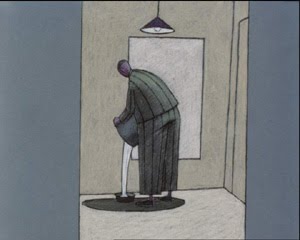 Artículo en Animation Blog acerca del corto "Insomnia". http://www.lunohod.lv/


